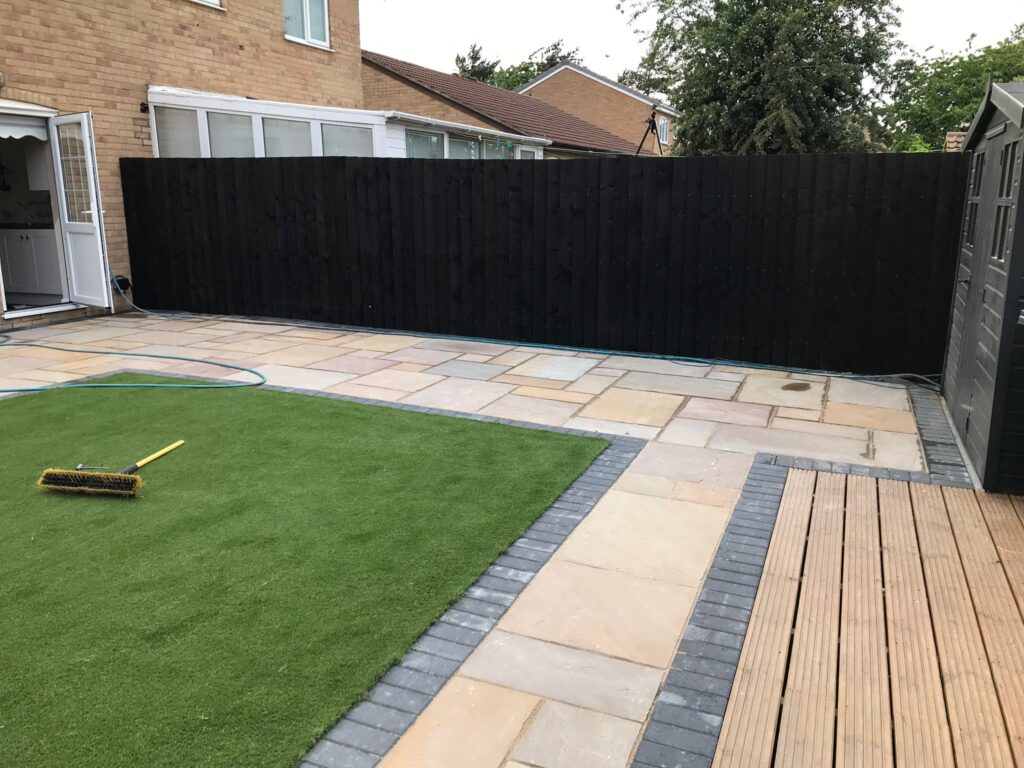
What Can You Do With a Patio That Feels Cramped and Poorly Positioned?
A patio should provide enough room for comfortable seating, movement and access to the garden. When it feels cramped or sits in an inconvenient location, even an otherwise sound paved area may receive very little use.
For homeowners in Letchworth Garden City, Hertfordshire, the solution may involve extending, reshaping or repositioning the patio rather than simply replacing its surface. A successful redesign starts by understanding why the current layout does not work and how the surrounding garden is used.
How to Improve an Awkward or Undersized Patio
A cramped patio is not always caused by a lack of overall garden space. Its shape, relationship with the house, access routes and position in relation to sunlight can all affect how practical it feels.
Before making changes, it is helpful to consider the furniture, activities and number of people the finished area needs to accommodate.
Identify What Is Making the Patio Feel Cramped
Outdoor furniture requires more space than its dimensions alone suggest. Chairs need room to move backwards, people must be able to walk around a table, and access routes should remain clear while the patio is in use.
A patio may feel too small because:
- furniture occupies the main walking route
- the shape creates narrow or unusable corners
- doors open directly into the seating area
- steps interrupt the available floor space
- planting has encroached over the edges
- the patio does not connect conveniently with the garden
- too many functions have been placed in one compact area
Identifying the specific restriction makes it easier to choose an effective redesign.
Extend the Existing Patio
Where the position is suitable but the dimensions are inadequate, extending the patio may provide the necessary space. Additional paving can create room around a table, allow seating to be arranged more comfortably or provide a clearer route between the house and garden.
An extension should feel like part of the original design. Finished levels, falls, edging and material transitions must be planned carefully. Simply adding a narrow strip of paving may increase the area without resolving the awkward layout.
The condition of the existing patio also matters. If the paving has moved or settled, the underlying base should be assessed before an extension is connected to it.
Change the Shape of the Area
A patio can have sufficient square footage yet still feel restrictive because of its shape. Long, narrow layouts often force furniture and foot traffic into the same space, while small corners may serve no practical purpose.
Reshaping the perimeter can create a more useful central area. A wider rectangular layout may suit dining furniture, whereas a carefully planned curved or angled edge can improve the connection with surrounding planting.
The shape should follow how people naturally move through the garden rather than being chosen for appearance alone.
Consider Repositioning the Patio
If the existing patio is persistently shaded, exposed, disconnected from the house or located along a busy access route, extending it may not solve the underlying problem.
A different part of the garden may offer a more comfortable place to sit or entertain. The best position depends on factors such as:
- access from the property
- sunlight and shade at the times the patio will be used
- exposure to wind
- views into the garden
- proximity to planting and trees
- ground levels and drainage
- privacy within the property
Relocating a patio can also allow the original space to be incorporated into a path, planting area or another practical garden feature.
Improve the Route Between the House and Garden
A patio often acts as a transition between the property and the wider garden. If people must walk through the seating area to reach a gate, shed or lawn, the space can feel congested even when it is reasonably large.
A defined path around or beside the patio can separate movement from relaxation. Adjusting the position of steps or widening a narrow entrance may also improve circulation.
The aim is to create clear routes that remain usable when chairs and tables are occupied.
Create Separate Functional Zones
A single patio may need to accommodate dining, informal seating, planters and regular access. Dividing the space into simple zones can prevent these uses from competing with one another.
This does not always require different paving materials. Changes in layout, edging or furniture position can distinguish each section while maintaining a consistent surface.
For example, the main seating area can occupy the broadest part of the patio, with planters placed along the perimeter rather than where they restrict movement. A separate route can then connect the property to the lawn or other garden areas.
Review Levels, Steps and Drainage
Poor positioning is sometimes linked to incorrect levels. An awkward step, steep change in height or area of standing water can make part of the patio difficult to use.
Any redesign should establish suitable finished levels before new paving is installed. The surface requires a controlled fall so rainfall drains away without creating puddles or directing water towards the property.
Where the garden slopes, well-positioned steps or a carefully designed change in level may create a more usable layout. These elements should be integrated into the patio rather than treated as later additions.
Choose Materials for the Intended Use
The paving should suit the way the patio will be used and the conditions around it. Surface texture, unit size, joint layout and edging all influence both practicality and appearance.
Larger paving units can create a less visually busy finish, while smaller units may provide flexibility around curves or detailed edges. The material must be laid on a properly prepared base so the finished surface remains stable beneath furniture and foot traffic.
If the patio is being extended, it may be possible to coordinate with the existing paving or introduce a deliberate contrasting section. An approximate mismatch can make an extension appear unplanned.
Decide Whether to Adapt or Rebuild
Adaptation may be appropriate where the existing base is stable, the paving remains sound and the main problem is limited to size or shape.
More extensive reconstruction may be sensible when the patio has widespread movement, unsuitable levels, recurring drainage problems or a position that does not support how the garden is used. Rebuilding provides an opportunity to correct the complete layout rather than carrying existing weaknesses into the revised space.
A professional assessment can determine which parts, if any, are suitable to retain.
Conclusion
A patio that feels cramped and poorly positioned can often be improved by extending it, changing its shape, creating clearer access routes or moving the main seating area. The right solution depends on why the existing patio is difficult to use.
Careful attention to dimensions, circulation, levels and drainage can turn an awkward area into a practical part of the garden. If you are considering redesigning a patio in Letchworth Garden City, Hertfordshire, LGC Driveways & Patios can assess the current layout and recommend an approach suited to the property. Contact our team to arrange a professional site assessment.
Call us on:01462 419 193
Click here to find out more about LGC Driveways & Patios
Click here to complete our contact form and see how we can help with your driveway needs.